

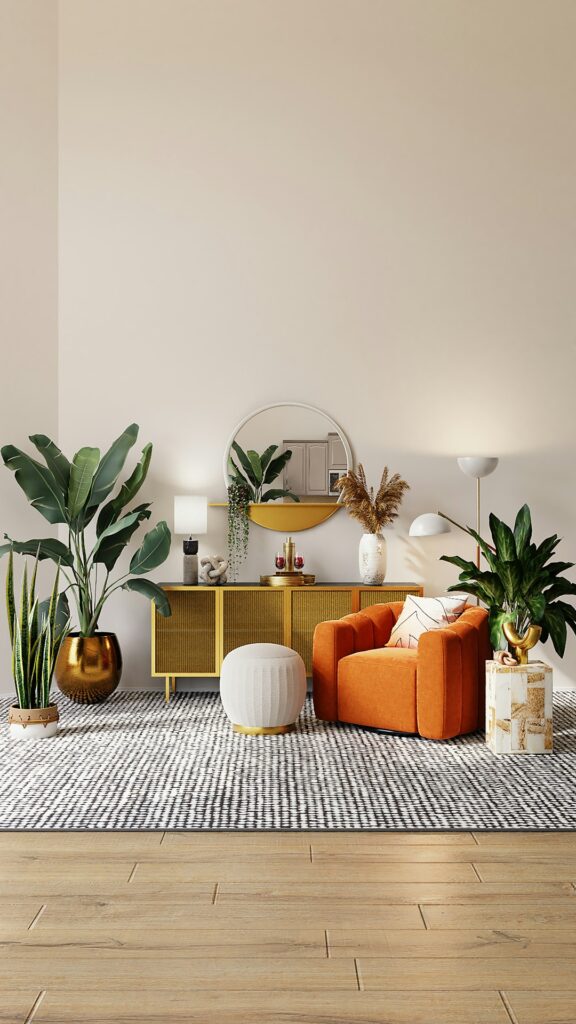
Decorating a home in Pinehurst, NC requires more than choosing attractive colors and furniture. Warm, humid summers, seasonal pollen, pine-heavy surroundings, and a mix of established and newer homes all affect how finishes perform and how rooms feel throughout the year.
Many decorating problems are not caused by poor taste. They usually come from choices that overlook scale, natural light, maintenance, moisture, or the way a household actually uses its rooms.
What is the most common home decor mistake?
The most common mistake is decorating around individual items instead of planning the room as a whole. A homeowner may choose a rug, sofa, paint color, or light fixture separately, then discover that the pieces compete for attention or do not fit the room’s proportions.
Before buying anything, consider:
- How people move through the space
- Where natural light enters during the day
- Which furnishings must remain
- Whether the room needs conversation seating, storage, dining space, or work space
- How much visual contrast the room can comfortably handle
A simple floor plan can prevent expensive mistakes. Mark doors, windows, vents, outlets, and walkways before arranging furniture. In smaller rooms, preserving a clear path often matters more than adding another decorative piece.
Why is furniture scale so important?
Furniture that is too large can make a room feel crowded, while furniture that is too small may leave the space looking unfinished. Scale should be judged against the room, not only against the item’s appearance in a showroom or online photograph.
In a living room, a sofa should allow comfortable movement around it without blocking major walkways. Chairs should relate to the sofa in height and visual weight. A large sectional may suit an open family room but overwhelm a narrow sitting room.
Area rugs are frequently undersized. A rug that only touches the front legs of some furniture can make the seating arrangement feel disconnected. In many rooms, the rug should extend far enough to visually group the main furniture. If that is not practical, placing the front legs of each major seating piece on the rug is usually more cohesive than leaving every piece around its edges.
Are too many matching pieces a problem?
A room can feel flat when every item comes from the same collection or uses the same finish. Coordinated decor is useful, but exact matching often removes depth and makes a space appear staged rather than lived in.
Instead of purchasing identical tables, lamps, frames, and storage pieces, repeat a few elements across the room. Similar wood tones, related metal finishes, or a consistent color family can create unity without making everything look the same.
This approach is also practical for households that update rooms gradually. Existing furniture can often work well when paired with new textiles, art, or lighting that shares one or two visual qualities.
What color mistakes should homeowners avoid?
The most frequent color mistake is choosing paint before considering lighting, flooring, upholstery, and fixed surfaces. A color that looks calm in a bright store or online photograph may appear much darker, cooler, or more saturated at home.
Test paint samples on more than one wall. Observe them in morning, afternoon, and evening light. Pinehurst homes may receive strong sunlight in some rooms and filtered light in others, particularly where mature trees affect exposure. Artificial lighting also changes how colors appear after sunset.
Another mistake is using too many unrelated accent colors. A room does not need a new color for every pillow, accessory, and artwork. A restrained palette with one dominant color, one supporting color, and a few natural or neutral elements is usually easier to maintain.
Dark colors are not automatically a problem, and light colors are not automatically practical. The better question is whether the color suits the room’s light, purpose, and maintenance needs.
Why can window treatments go wrong?
Window treatments are often hung too low or fitted too narrowly. Mounting curtain hardware immediately above the window frame can make the ceiling appear lower, while panels that barely extend past the glass may block useful light when open.
Where the wall allows, mounting hardware higher and extending it beyond the window can create a more generous appearance. Panels should be long enough to reach the floor or nearly reach it, unless a sill-length treatment is intentionally being used.
Function matters as much as appearance. Rooms with strong afternoon sun may need light-filtering or room-darkening options. In areas affected by pollen and dust, washable fabrics are often easier to live with than delicate materials that require specialized care.
Avoid placing fabric where it rests against damp surfaces, blocks an air return, or interferes with a ceiling fan or door.
Is overdecorating worse than having too little decor?
Overdecorating can make a room less comfortable and less useful. Every surface does not need an object, and empty space is not necessarily unfinished space.
Too many accessories create several problems:
- Dusting takes longer
- Important items lose visual emphasis
- Shelves and tables become difficult to use
- Rooms can feel smaller
- Seasonal changes become cumbersome
Pinehurst households may also contend with outdoor debris, pollen, and humidity-related dust. Reducing unnecessary objects can make routine cleaning easier without making a room feel bare.
Group accessories by height and shape rather than spreading small items evenly across every surface. Leave some open space around meaningful objects so they can be seen clearly.
What materials are easy to misuse in a humid climate?
Materials should be selected with moisture, sunlight, and cleaning habits in mind. Natural materials can be beautiful, but some finishes are more sensitive to humidity, spills, or prolonged direct sun than homeowners expect.

Common oversights include:
- Placing untreated wood where condensation or frequent spills are likely
- Using delicate rugs in high-traffic entry areas
- Choosing fabrics that show every mark in a busy family room
- Positioning artwork or furniture in direct sun without considering fading
- Ignoring ventilation in rooms where moisture accumulates
This does not mean every home needs synthetic or highly durable materials. It means the material should match the location. A textured fabric may work well in a low-traffic sitting room but be frustrating on a frequently used dining chair. A washable rug may be more practical near an entry than a fragile decorative textile.
Keep furniture slightly away from exterior walls when possible, especially where airflow is limited. Watch for musty odors, swelling, peeling finishes, or recurring condensation, since these may indicate a moisture issue rather than a decor issue.
Why should lighting be planned in layers?
Relying on one ceiling fixture often leaves a room too bright in one area and too dim in another. Layered lighting combines general illumination, task lighting, and accent lighting.
A comfortable room may include:
- Overhead lighting for general visibility
- Table or floor lamps for reading and conversation
- Under-cabinet or focused lighting for work areas
- Accent lighting to highlight artwork or architectural details
Use warmer light in relaxing spaces and brighter, more focused light where tasks require accuracy. Place switches and lamps where they are convenient rather than treating lighting as an afterthought.
Mirrors can help distribute daylight, but placing one directly opposite a bright window may create glare. A slightly angled position is often more comfortable.
What should be avoided in open-concept rooms?
Open-concept spaces need visual connection, but every area should not look identical. Using the same rug, furniture arrangement, and color treatment throughout a large room can make the space feel anonymous.
Define zones through furniture placement, lighting, rugs, or ceiling fixtures. For example, seating can face inward toward conversation while a nearby table and light identify a separate reading area. Keep repeated colors or materials across the zones so they relate without becoming one oversized room.
Do not push every piece of furniture against the walls simply to create an open center. A few furnishings placed closer together can make the room more inviting and improve conversation.
How can homeowners avoid decorating for appearance alone?
A room should support daily routines before it serves as a photograph. Ask whether there is a place for shoes, mail, charging devices, blankets, books, pet supplies, or seasonal items. If those needs are ignored, clutter usually returns regardless of the room’s style.
Choose storage that is easy to access and maintain. Use closed storage where visual calm is important, and open shelving only where regular organization is realistic.
The strongest decor decisions usually combine proportion, comfort, light, durability, and personal use. Attractive rooms become easier to maintain when those practical factors are considered before decorative purchases are made.