

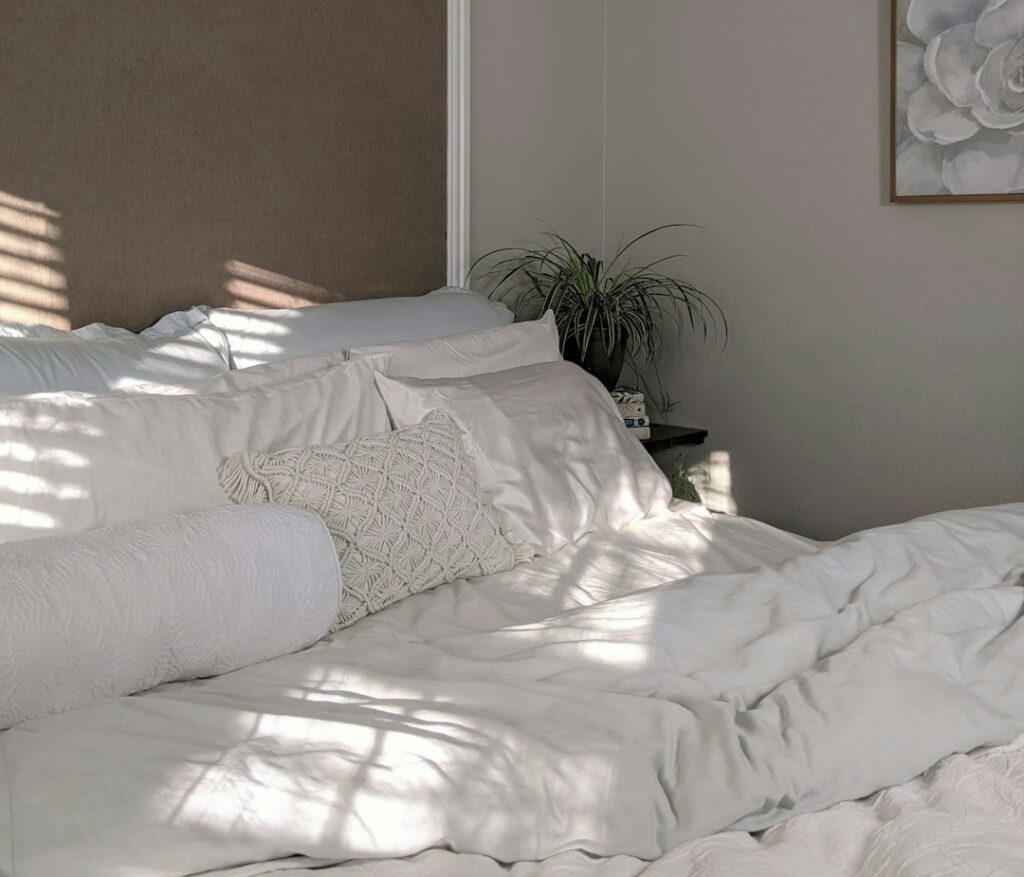
A bedroom can feel noticeably different without a full renovation. In Pinehurst, NC, simple changes such as lighter bedding, better airflow, updated lighting, and more intentional storage can make the room feel calmer, cooler, and easier to maintain.
Which bedroom changes make the biggest difference?
The most noticeable improvements usually come from changing the surfaces and conditions that occupy the most visual space: bedding, wall color, window treatments, lighting, and floor coverings. These updates can refresh the room without altering its layout.
Start by looking at the bedroom as a group of layers rather than a collection of individual items. A bed, rug, curtains, lamps, and wall color should feel related, even if they are not part of a matching set.
A practical refresh might include:
- Replacing heavy or worn bedding with breathable layers
- Moving furniture to improve walking space
- Adding two consistent bedside lamps
- Removing excess items from visible surfaces
- Using curtains that soften daylight without blocking all natural light
- Introducing one or two textures, such as woven baskets or a washable throw
The goal is not to fill the room. A bedroom generally feels more restful when there is enough open space around the bed and fewer objects competing for attention.
How can bedding improve comfort in a warm, humid climate?
Breathable bedding is especially useful during warmer months. Natural or moisture-managing fabrics can feel more comfortable than dense, heat-trapping layers, particularly in homes that rely on ceiling fans or central air for cooling.
A flexible bedding arrangement works well through seasonal changes. Use a washable coverlet or lightweight quilt as the main layer, then add a blanket that can be removed when temperatures rise. This approach is often more practical than using one very thick comforter year-round.
Consider these details:
- Choose sheets that feel comfortable against the skin and are easy to launder.
- Use a mattress protector that allows airflow instead of a thick, plastic-feeling layer.
- Wash pillows and bedding according to their care instructions to reduce dust and odors.
- Rotate or turn the mattress when the manufacturer allows it.
- Keep extra blankets in a breathable basket or ventilated closet rather than tightly compressing them for long periods.
Humidity can also affect textiles stored in closets or under beds. Avoid packing linens while they are even slightly damp, and leave room for air circulation around storage containers.
Should bedroom furniture be rearranged?
Rearranging furniture can improve the room without spending anything. Begin with the bed because it is usually the largest and most visually important piece.
A common arrangement places the bed where it does not block the doorway, closet, or main window. The bed should also leave a comfortable path for walking. In smaller rooms, a few inches of additional clearance can make the space feel more functional.
Before moving heavy furniture, measure the room and sketch possible layouts. Pay attention to:
- Door swings and closet access
- Window placement and direct sunlight
- Outlet locations
- Ceiling fan clearance
- Space needed to open drawers
- Safe walking paths at night
Avoid placing tall furniture directly against a window if it blocks daylight or makes the room feel crowded. In bedrooms with strong afternoon sun, moving the bed or adding lined curtains may also help protect fabrics and wood finishes from fading.
What lighting creates a calmer bedroom?
Layered lighting is more useful than a single bright overhead fixture. A restful bedroom usually benefits from general light, task light, and softer accent light.
Bedside lamps provide practical light for reading and reduce the need to use a bright ceiling fixture at night. If the room has limited table space, wall-mounted fixtures or slim floor lamps may preserve more surface area.
Use bulbs with a warm appearance for evening use, while brighter neutral light can be helpful in closets, dressing areas, or near a mirror. A dimmer can make existing lighting more adaptable, but any electrical work should be completed safely and according to applicable requirements.
Natural light also deserves attention. Lightweight curtains can provide privacy while keeping the room bright during the day. If early morning light affects sleep, add a second layer that can be closed at night.
How can color refresh a bedroom without repainting?
Paint is not the only way to change a bedroom’s color balance. Bedding, curtains, rugs, artwork, and lampshades can shift the room’s appearance while keeping the walls unchanged.
For a calm look, select one main neutral and one or two supporting colors. For example, warm white bedding with muted green or blue accents can create a softer appearance than using several unrelated bright colors.
A useful approach is the 60-30-10 balance:
- About 60 percent of the room remains the dominant color, often walls, flooring, or large furniture.
- About 30 percent comes from secondary elements such as bedding or curtains.
- About 10 percent provides contrast through pillows, artwork, or smaller accessories.
This is a guideline rather than a strict formula. The main purpose is to prevent the room from feeling visually scattered.
Test fabric colors in both daylight and evening light before committing. A shade that appears gentle in the morning may look much stronger under artificial lighting.
What should be removed before adding anything new?

Decluttering often creates a stronger refresh than buying new accessories. Start with the surfaces most visible from the doorway: the top of the dresser, nightstands, open shelving, and the area around the bed.
Remove items that do not support sleep, dressing, reading, or storage. This may include unused décor, old paperwork, excess clothing, and objects that have collected dust.
Use a simple sorting method:
- Keep items used regularly.
- Relocate items that belong elsewhere.
- Repair or donate items that are useful but no longer needed.
- Discard damaged items that cannot reasonably be reused.
Under-bed storage can be helpful, but it should not become a place for forgotten belongings. Choose containers that are easy to pull out and label them clearly. Leave some open space so cleaning and inspection remain manageable.
How can residents protect a bedroom from seasonal dust and pollen?
Seasonal pollen, outdoor dust, and tracked-in debris can affect bedroom comfort. Regular cleaning matters more than decorative changes if the room feels dusty or causes irritation.
Use washable curtains or shades where practical, and clean ceiling fan blades periodically. Dust tends to collect on fan blades and then circulate through the room when the fan is turned on.
Other useful habits include:
- Washing bedding regularly in water appropriate for the fabric
- Cleaning air-return grilles and replacing filters as directed
- Vacuuming beneath the bed and along baseboards
- Using a washable mat near the bedroom entrance
- Keeping windows closed during periods of heavy outdoor pollen if symptoms are a concern
- Allowing bathrooms, closets, and other nearby areas to dry properly
In homes with older flooring or uneven surfaces, inspect for dust-catching gaps around baseboards and furniture. The objective is consistent maintenance rather than creating a completely dust-free room.
What is a low-cost bedroom refresh plan?
A practical refresh can be completed in stages. Begin with changes that cost little or nothing, then add selected items only after the room’s needs are clear.
A simple sequence is:
- Remove clutter and clean overlooked areas.
- Test a new furniture arrangement.
- Replace or rearrange bedding.
- Improve bedside and overhead lighting.
- Add one texture, such as a rug, throw, or woven storage basket.
- Reassess the room after living with the changes for several days.
This process helps prevent unnecessary purchases. It also accounts for the way natural light, seasonal humidity, and daily routines affect the room in actual use.
A refreshed bedroom should support rest, movement, storage, and easy cleaning. The most successful changes are usually the ones that make those everyday functions simpler while giving the room a more settled appearance.